Eiffel Trading Marketplace
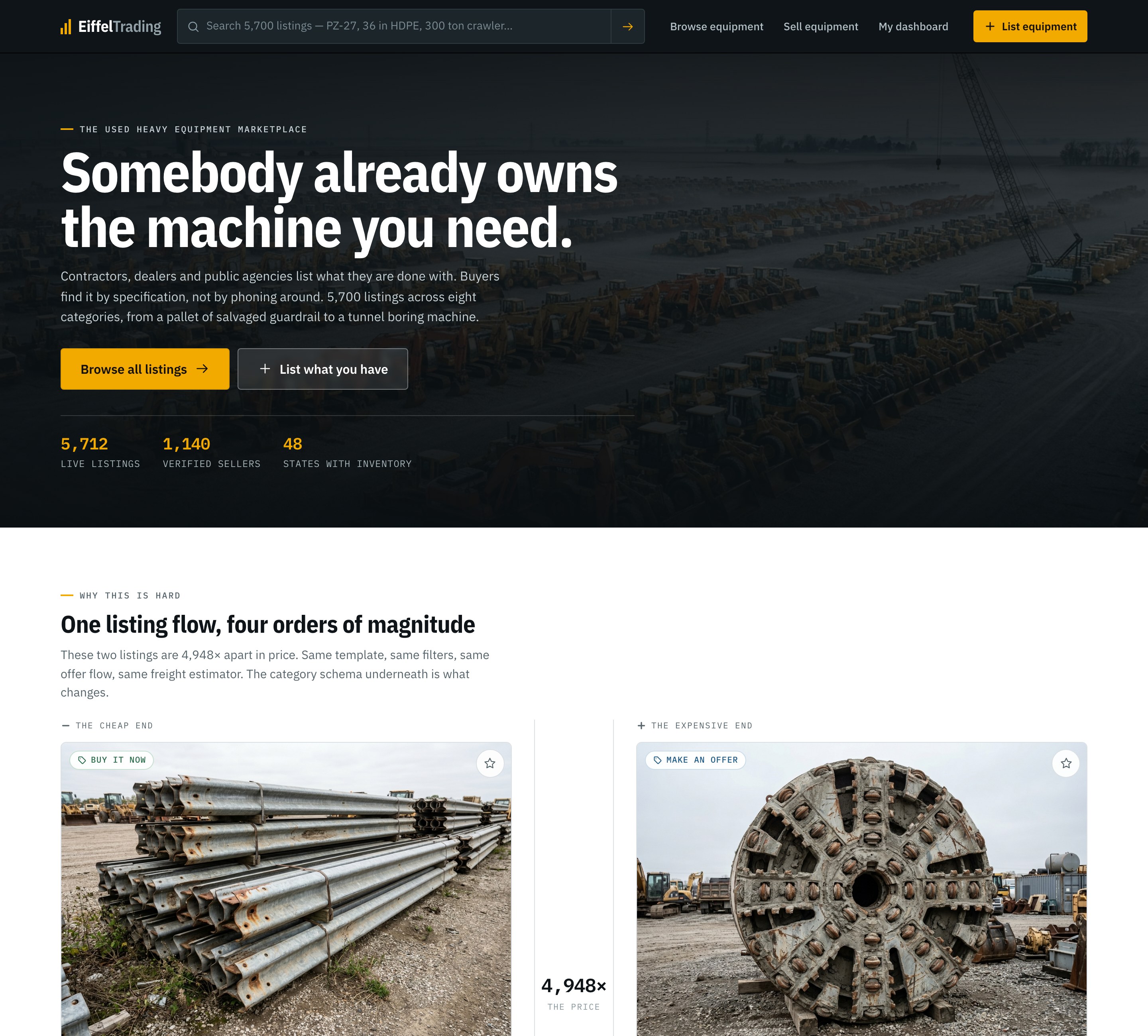
Used heavy equipment moved by word of mouth and trade magazines. The interesting part turned out to be range — one listing template carrying a $485 pallet of guardrail and a $2.4M tunnel boring machine, with neither one looking like the lesser product.
A marketplace that didn't exist
Used heavy equipment moved by word of mouth, trade magazines, and scattered regional auctions. A county in Texas sitting on surplus pipe and a contractor in Ohio who needed exactly that pipe had no dependable way to find each other.
Eiffel wanted the first online marketplace for the category. The obvious build is a listings site with a search box over the top of it.
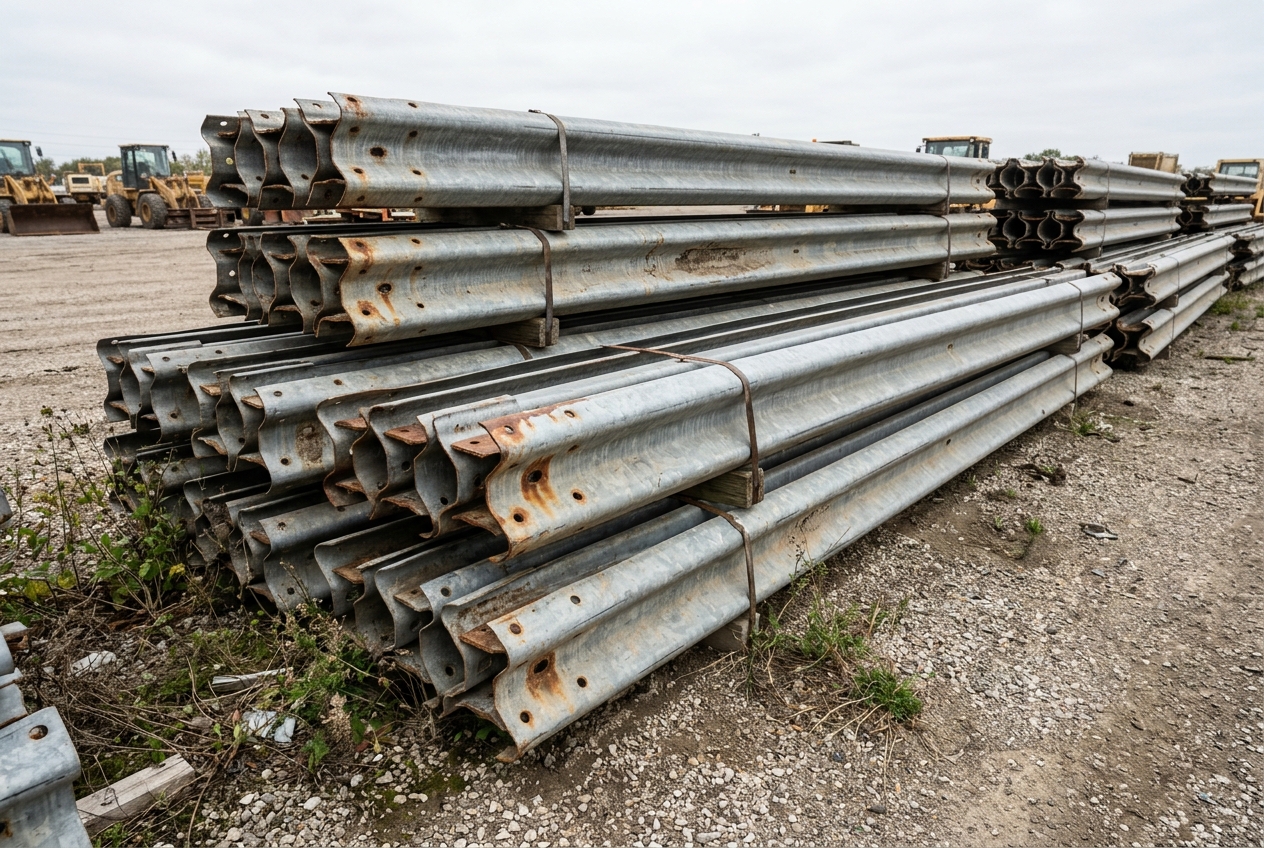
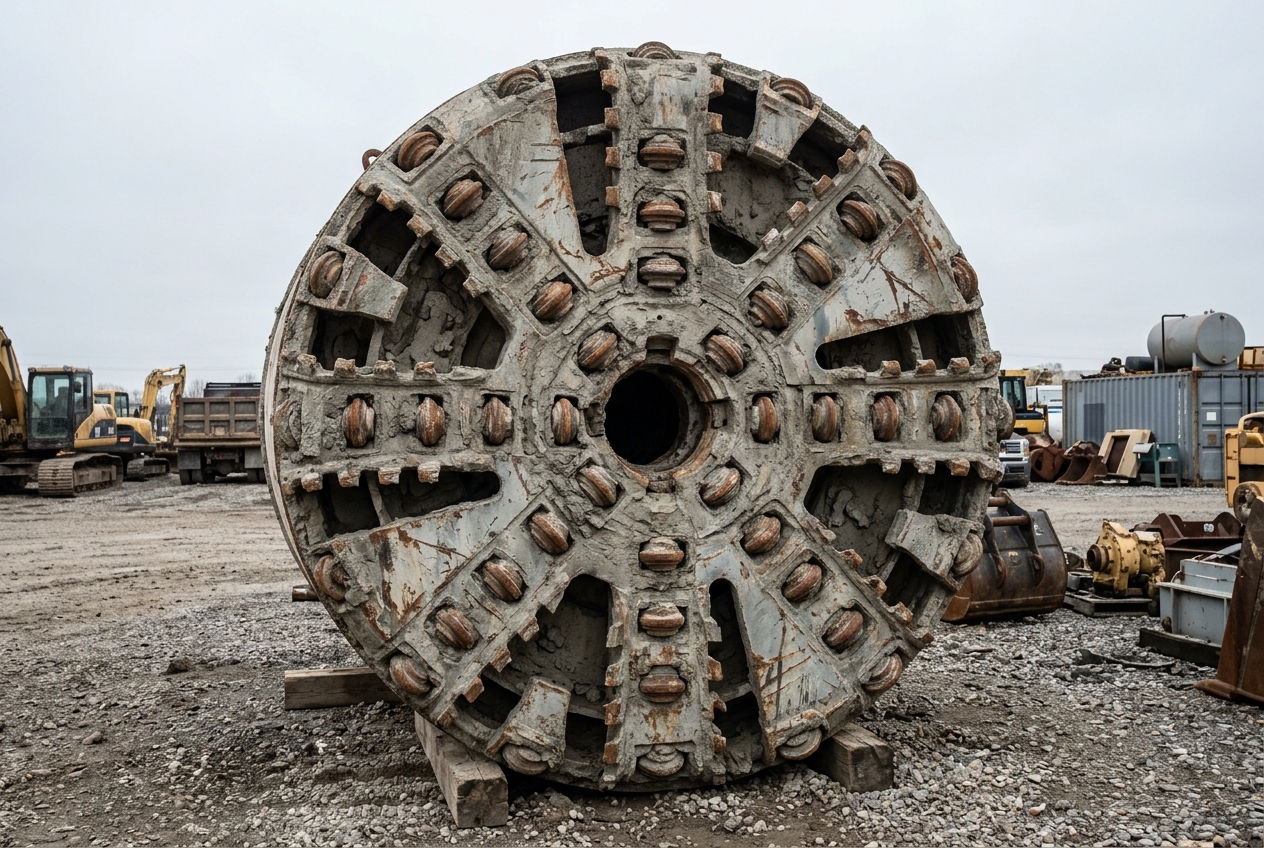
The range is what made it interesting. A pallet of salvaged guardrail sells for $485. A used tunnel boring machine sells for $2.4M. Both are listings. Both need photographs, specifications, a price and a way to make an offer, and the same search has to put either one in front of the person hunting for it.
Underneath, it ran on Salesforce so the team could work their deal pipeline in the system they already used.
The marketplace as it shipped
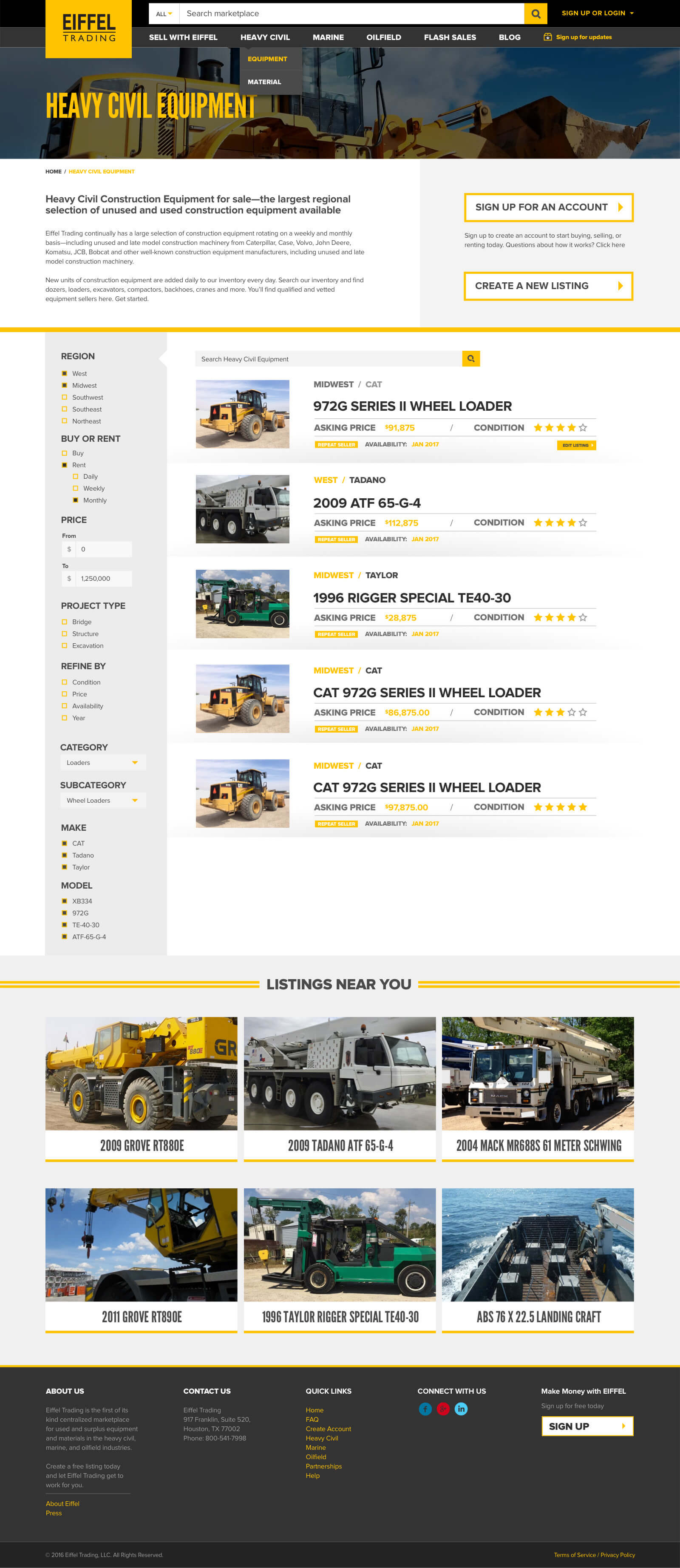
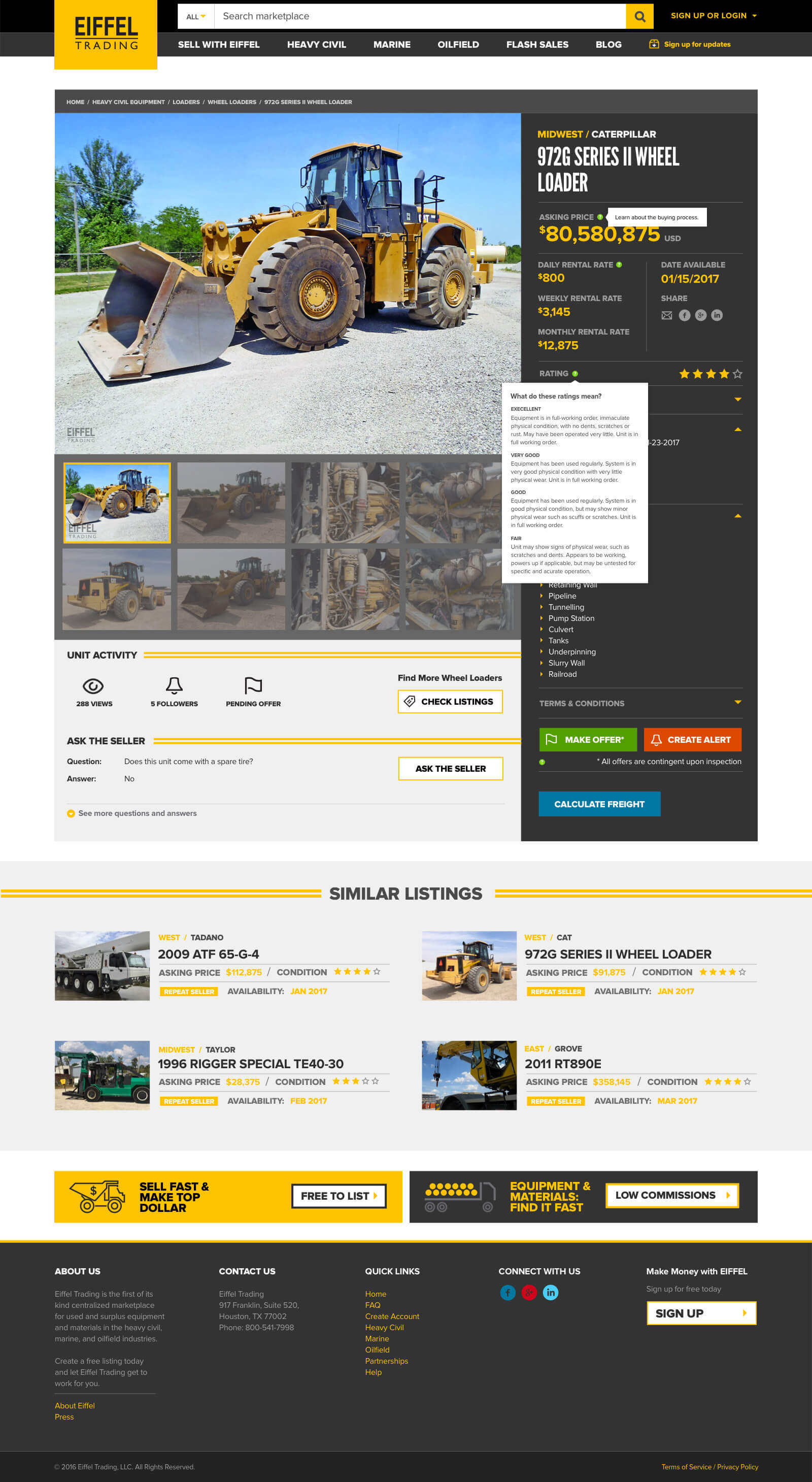
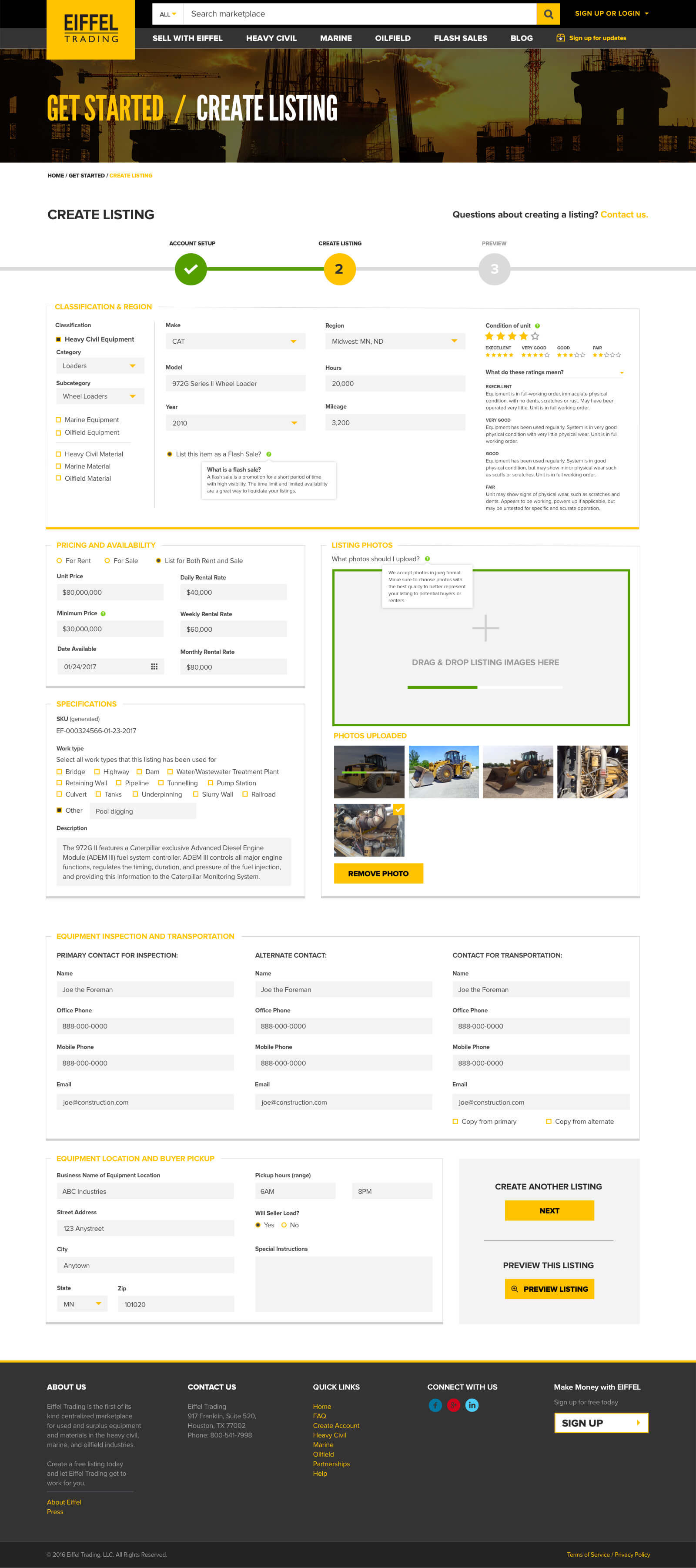
Faceted browse, the listing wizard, and the seller dashboard, running on Salesforce.
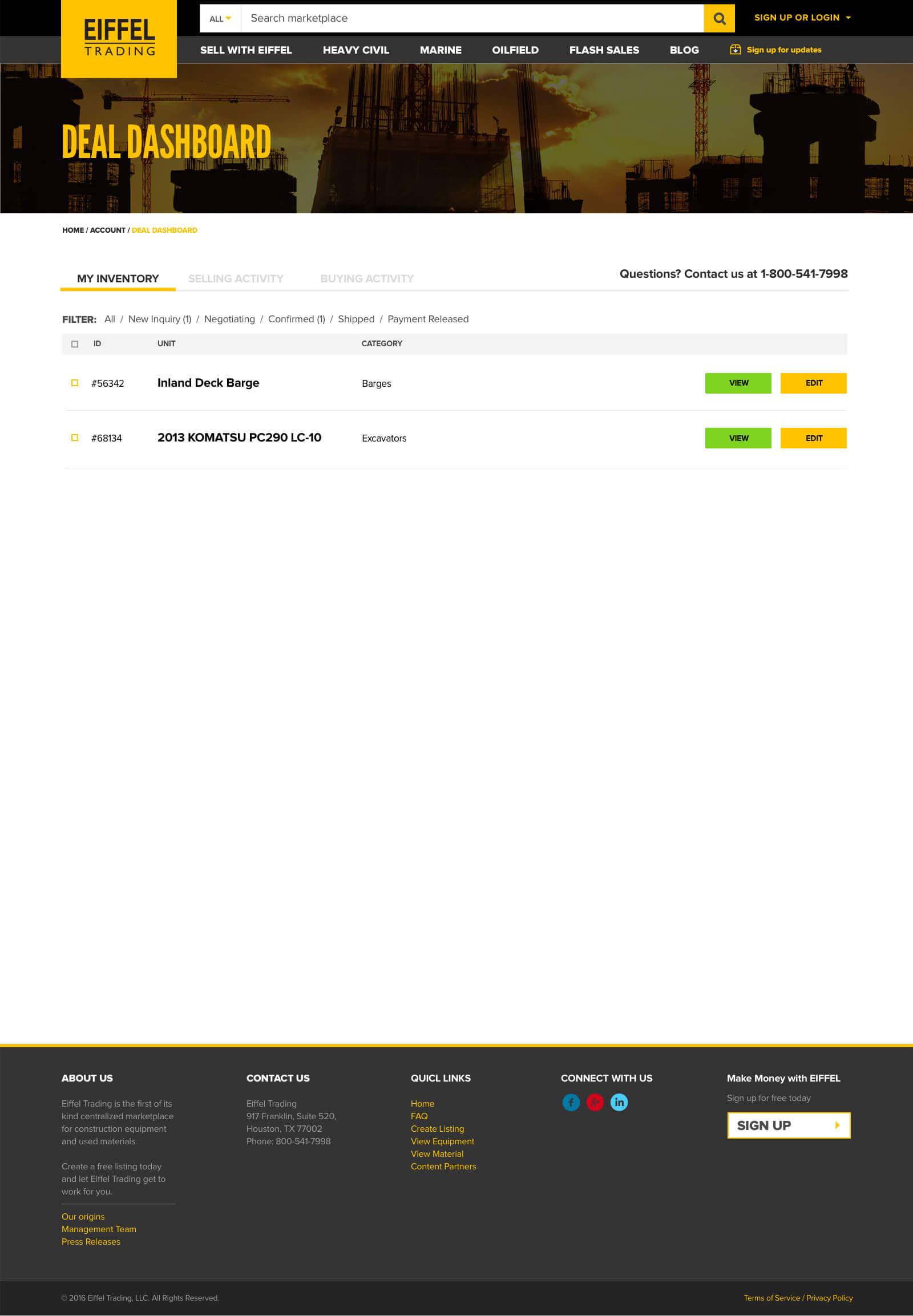
One listing template, four orders of magnitude
A pallet of salvaged guardrail sells for $485. A used earth pressure balance tunnel boring machine sells for $2.4M. Both are listings. Both need photos, specifications, a price, a seller, and a way to make an offer.
The temptation is to build two products, or to scale the design to the money — bigger type and more chrome as the price climbs. I set the two at identical sizes instead. The moment a figure grows with its number, cheap listings start reading as a lesser product, and most of the inventory in this category is cheap. What changes between them is the specification schema underneath: six fields for guardrail, eight for the machine, none shared.
Discovery, listing, integration
- 01
Discovery and search
Faceted search across category, condition, price, location and industry. A buyer who knows the spec they need finds it by that spec rather than by phoning around. Saved searches brought repeat buyers back.
- 02
The listing wizard
Photos, specs, condition ratings, and pricing as buy, lease or make-an-offer. Breaking it into steps took listing creation from about thirty minutes to under five.
- 03
Salesforce underneath
Listings, inquiries and transactions flowed into the CRM the team already ran their pipeline in. Apex controllers carried the marketplace logic; Salesforce kept the data, workflows and reporting.
How I'd build it today
A rebuild of the marketplace. The listing template carries a $485 pallet of salvaged guardrail and a $2.4M tunnel boring machine without either looking like the lesser product, and the filters change shape by category — a crane filters on lift capacity and boom length, pipe on diameter and linear feet. Sellers, listings and prices are invented.