Design by Conversation
No flowchart, no swim lanes. A look at what the day-to-day workflow actually looks like when design intent and code implementation happen in a single conversation.
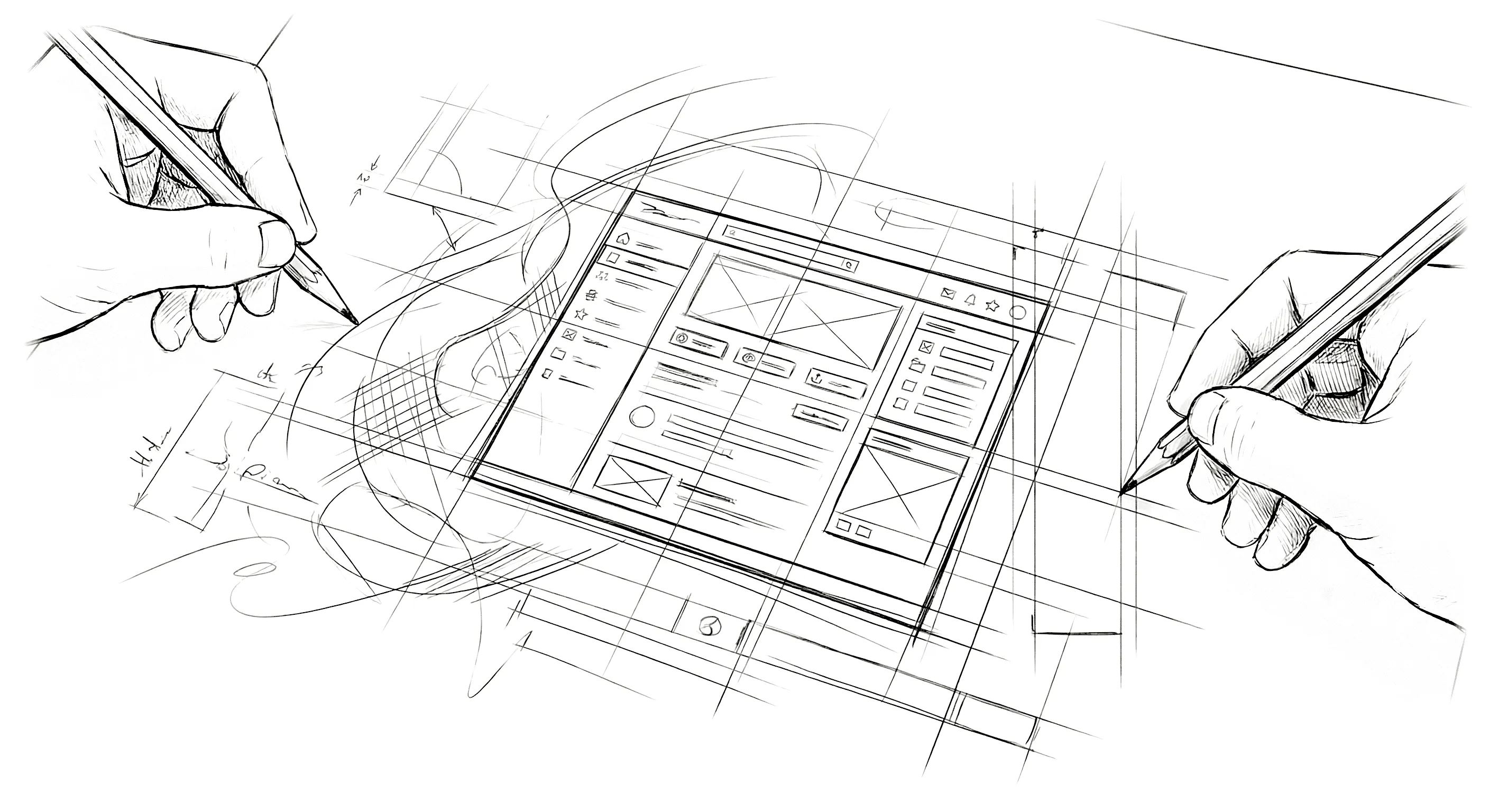
People keep asking me what my process looks like now. I suspect they’re expecting a diagram. A nice six-step flow with arrows, swim lanes, and probably a Notion template.
I don’t have one. I have a conversation.
That’s the closest description I’ve found for how I work now: a continuous exchange between design intent and implementation.
It Still Starts With the Problem
The first part hasn’t changed. I still start by figuring out what we’re solving, who we’re solving it for, and what the experience needs to accomplish. What’s the important action? Where is the cognitive load? What constraints are real? What does the user need to understand before they can move forward?
If you skip that part, you can build the wrong thing much faster.
The difference comes after the thinking. In the old workflow, I’d translate those decisions into a design file. That file became the reference everyone else worked from, including me when I eventually moved into development. Now I can turn the thinking directly into a working interface.
For example, I might start with something as specific as:
I need a three-column dashboard. Use a fixed 240px sidebar, flexible main content, and a 320px contextual panel. Collapse the contextual panel into a drawer on tablet and move to a single column on mobile.
That’s design intent and implementation direction in the same instruction. A few minutes later, there’s something in the browser I can react to. It’s not finished. It doesn’t need to be. I need something concrete enough to evaluate.
Make a Decision. Look at the Result. Adjust.
The first output is a starting point. I’ll look at it and notice that the sidebar feels too heavy. I’ll ask for a narrower version, or perhaps a more compact treatment at a particular breakpoint. The drawer might work, but the transition feels rushed. I’ll adjust the timing and try it again.
Sometimes the next instruction is about the overall experience. Sometimes it’s a specific CSS change. Usually, it’s a mixture of both.
That’s how I’ve always approached design: make a decision, look at the result, learn something, and adjust. The old process made that loop expensive. You might go from design review to development, then QA, then a ticket, then another revision and another review. Each step introduces delay, and every delay makes experimentation a little less appealing.
Now I can keep that loop running while the idea is still taking shape. The interface isn’t being generated and accepted. It’s being directed.
That distinction matters. I’m not asking an AI to make all the design decisions for me. I’m using it to shorten the distance between making a decision and finding out whether it works.
What Happens to Precision?
This is where I think experienced designers have a legitimate concern. If you’re working conversationally, how do you maintain the precision you’d expect from a proper design system?
The answer is that precision doesn’t have to disappear. In some cases, it improves because you’re evaluating the actual interface instead of a representation of it. I can define the spacing system, type scale, color tokens, component behavior, and responsive rules directly. Then I can inspect the CSS and see whether the implementation follows them.
If the layout feels too dense, I can investigate what’s causing it rather than simply annotating a mockup with a note to make things more spacious. If an interaction feels wrong, I can try it rather than describe how I imagine it should behave. And if a layout becomes awkward at 1,024px, I can resize the browser and find out immediately.
Working code answers questions that static designs can’t. That doesn’t mean a mockup is useless. There are still times when sketching, mapping flows, or exploring layouts before writing code makes sense. The point is that a static design no longer has to be the mandatory intermediary between an idea and a working experience.
The Complexity Doesn’t Disappear
This approach isn’t limited to landing pages or simple interfaces. I’ve used it for enterprise product work, multi-step forms, interactive maps, data-heavy interfaces, and client projects.
The complexity is still there. A component needs loading, error, empty, and success states. Data needs to be fetched. Authentication needs to work. Architecture still matters. Responsive behavior still needs to be considered. But design and implementation decisions don’t have to live in separate conversations.
Take a loading state. I might ask for data to be fetched when the component mounts, a skeleton that matches the dimensions of the finished content to avoid layout shift, and an error message that explains what happened and gives the user a way to recover. That’s a design decision and an engineering decision together.
It’s also how I think about the problem. I don’t naturally separate the experience from the mechanics required to make it work. Being able to express both in the same conversation feels much closer to how I want to work.
Of course, the quality of the result still depends on the instructions, the underlying code, and the judgment applied to what comes back. A conversational workflow doesn’t eliminate the need to understand what you’re building. It gives you a more direct way to work through it.
The Part That Matters Most
I enjoy this workflow. That’s worth mentioning because the difference isn’t just about getting more work done in less time.
For 25 years, I’ve been switching between designer and developer. Even when I was doing both myself, the work happened sequentially. Sketch first. Code second. I’d make a series of decisions in one environment, then move to another and work through the practical details of implementing them.
Now those activities can happen together. The gap between design intent and the thing in the browser has become small enough that I can stay inside it. I can explore an idea without first committing to a full design, and I can change the experience while I’m working through the implementation.
That changes how I approach the work. I spend less time translating decisions from one format to another and more time making decisions in the first place.
That’s the part that feels genuinely new.
Part 3 of the Hands-On series.